
The global shift towards plant-based diets has pushed food scientists to find alternatives that don’t sacrifice texture for ethics. While almond, oat, and soy milks are popular,
they often lack the “mouthfeel” and “richness” of traditional dairy. At SenoinfiTech, we have found that the secret to closing this gap lies in the micro-structure of Colloidal Microcrystalline Cellulose (MCC Gel).
Solving the “Watery” Problem
Plant proteins often behave differently than milk proteins, leading to a thinner, more “watery” consistency.
MCC Gel solves this by creating a three-dimensional network of micro-crystals. This network increases the perceived thickness of the beverage without making it gummy or sticky, mimicking the natural fat globules found in cow’s milk.
Stability in High-Calcium and Fortified Drinks
Many plant-based milks are fortified with Calcium or Vitamin D, which tend to settle at the bottom of the carton. Thanks to its thixotropic properties,
MCC Gel keeps these heavy particles in suspension, ensuring every glass provides the same nutritional value from the first pour to the last.
Heat Stability for Barista Editions
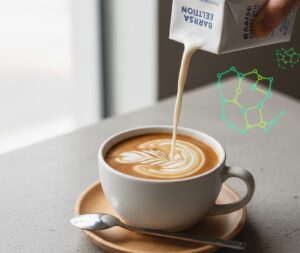
For the “Barista Edition” oat milks used in coffee, heat stability is crucial. MCC Gel is highly resistant to heat and pH changes,
preventing the milk from curdling or separating when added to hot, acidic coffee.
Conclusion
As the plant-based market continues to grow, texture will remain the key differentiator. By incorporating SenoinfiTech’s MCC Gel,
manufacturers can deliver the creamy, indulgent experience that consumers crave, all while maintaining a clean label and stable shelf-life.